By Adi Pathak, cofounder of CASA, for International Education Week
This International Education Week, I’m thinking about the day I found out I’d been accepted to Babson. I was the first in my family to go into business for myself. I’d spent years building a cotton business in India, and here was a chance to go somewhere new and learn how far I could take it.
When I think about student belonging, I remember what it felt like to come here and wonder if I’d find my people. Years later, I picked up the phone for a student who was wondering whether he should go home. It took me years to see how much those two moments had to do with each other.
I was twenty when I took a bet on myself in Indian manufacturing. I started in cotton trading, moved into ginning, and spent six or seven years growing the business. I made plenty of mistakes in rooms full of people who seemed like giants to me. Eventually, I wanted to see what it took to build something that could grow across India and beyond it.
That was why Babson became my dream school. I wanted to learn how to spot a problem myself and have the courage and judgment to do something about it. When I got in, I thought about the teenager I’d been, with limited resources and rarely the first pick of anything. I wanted to see how far someone like me could go.
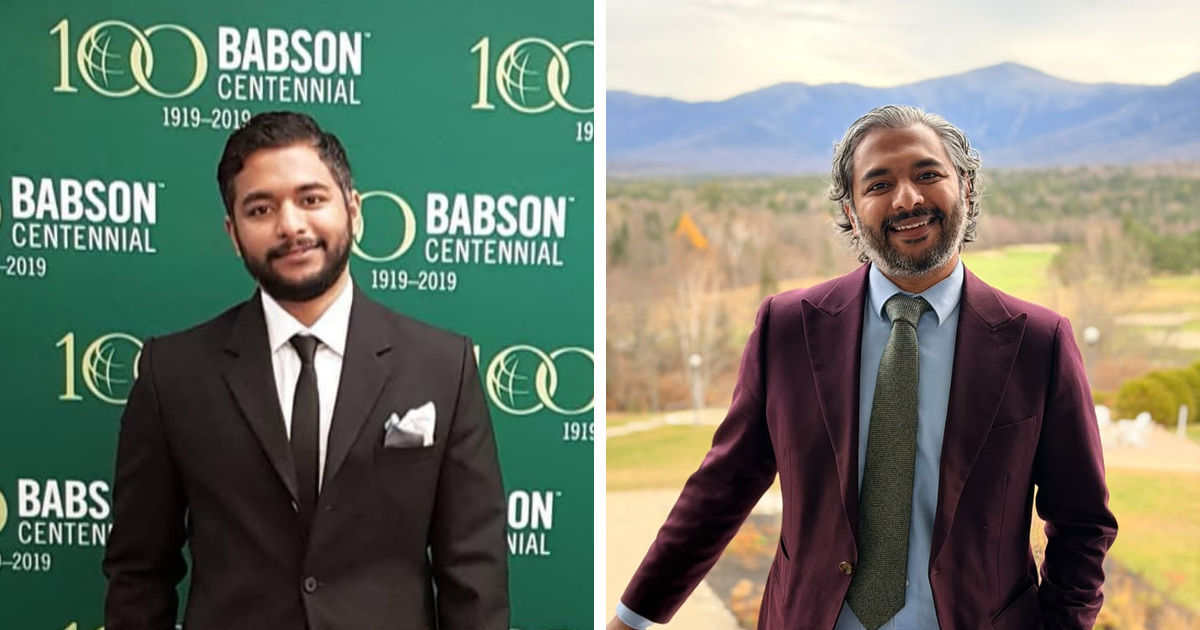
Adi Pathak during his MBA at Babson College.
How I found my people
I spent much of my first year at Babson asking myself a question. Where are my people here?
Toward the end of that year, I was working as a graduate assistant and had become someone students came to when they needed help finding funding for an event. I pushed for a seat on the Graduate Student Council dedicated to diversity and inclusion. When the council created it, I became its first elected vice president for diversity and inclusion.
Around that time, the partner of an MBA classmate came to talk to me. She was active in the graduate community and had recently had a baby. She would come to campus to see her husband off, and there was nowhere in the building to change her daughter. She needed a lactation room, too.
I remember telling her, “We will solve this.” I went to talk to people in the graduate school and Student Life. I kept following up, and they took the need seriously and made the changes happen. When the changing stations went in, I took a picture and texted it to her. I shared it in our graduate school WhatsApp chat, too. The messages came flooding in. “Great job, Adi.”
In my second year, I did some of my best work in class and received the Global Student Leadership Award and Babson’s Graduate Student Pride Award. I’m proud of both. When I think about what changed for me that year, I come back to that text message. I found home by making other people feel at home.
I spent five years working at Babson after my MBA and spoke with thousands of students making their own version of the bet I’d made. One student told me how hard it was to find people he felt at ease with. I got to know him and tried to help. He eventually continued his studies elsewhere. I understood why he left, and I still wish we could have helped him feel at home sooner.
Later, I helped edtech companies scale programs designed to close skill gaps. I kept thinking about what I’d heard described as “Porshe’s fishbowl,” the environment around the learner. Where you live, who you know, and who you can call when something goes wrong all shape what you’re able to get out of your education. I knew what that looked like from my own two years at Babson.
For me, that environment starts taking shape the day you get in. You’re excited. You tell your family. Then you start asking where you’ll live and who can help you figure things out from a distance. In those first weeks, Congratulations, we’re excited to welcome you can start to feel like Good luck getting here. We’ll see you on campus.
I later explored that stretch between admission and arrival in my research for AACRAO, drawing on conversations with 150 incoming graduate students about funding, visa readiness, and housing. Read Yield Is Won After Admission.
Member one
I was filling up at Costco on a Saturday when Valentina called. She’d just spoken to Sakshat, a new Babson student whose housing had turned out to be different from what he’d been promised. He’d checked into a motel and was thinking about going back home.
When I spoke to him, I said, “I’m your big brother, man.” I told him we’d meet in the next 24 hours and go look at apartments together. Gillian spent the weekend calling people she knew. We picked him up, toured apartments with him, and within three days helped him find a place and a roommate, Filippo. While they waited for the apartment to be ready, Filippo joined him at the motel. They spent the next couple of days there together.
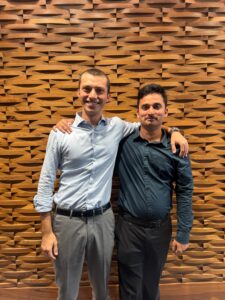
CASA was four people then, just beginning to work with Babson’s graduate admissions team. Sakshat became our first member. I have a photo of him and Filippo with their arms around each other, both grinning. I remember looking at it and thinking, Wow. He found home here. And he found a best friend.
Sakshat, CASA’s first member, with his roommate Filippo.
If I could go back to the day I got into Babson, I’d tell myself to enjoy it a little more. Ask for help sooner. Tell people what’s going well and what you’re struggling with. Let them in while you’re still figuring it out.
Looking at that photo of Sakshat and Filippo, I’m reminded of what I couldn’t have imagined when I opened my acceptance. Some of the people who would make this place home for me were people I’d meet by trying to do the same for them.